In Nairobi’s fast-growing eastern corridor, particularly around Jomo Kenyatta International Airport, schools, clinics and training centres are facing a new kind of operational pressure.
The challenge is no longer only enrolment, funding or facilities. It is continuity — keeping hygiene, staffing and daily operations stable enough to meet safeguarding and regulatory expectations.
This is why bundled services for schools in Nairobi and structured training institution services Nairobi are increasingly being viewed as part of institutional risk planning rather than convenience outsourcing.
For administrators responsible for institutional services near JKIA Nairobi, small breakdowns now carry disproportionate consequences.
Water reliability is no longer just a facilities issue
For most institutions, water is the first invisible dependency.
Disruptions to water delivery for schools in Embakasi, gaps in institutional water delivery Embakasi, or unreliable water supply for clinics in Nairobi immediately affect hand-washing compliance, cleaning schedules and infection-control protocols.
Recent regional public-health audits consistently show that inspection non-conformities in learning and healthcare environments often begin with basic sanitation failures rather than structural deficiencies.
This has driven growing demand for dependable water refill services near Embakasi Nairobi, particularly among campuses operating extended hours.
The operational reality is simple: when water supply is unstable, every other hygiene-related service becomes fragile.
Triad’s approach links its water services directly to the institutions it serves instead of operating as a detached utility vendor. The result is fewer delivery gaps, clearer escalation paths and better alignment with real operational timetables.
Uniforms and Linen Now Shape Safeguarding and Public Trust
Administrators increasingly search for school uniform laundry services Nairobi and commercial laundry for clinics in Nairobi not primarily because of convenience, but because cleanliness is now visible to parents, regulators and the public.
For schools in particular, the need for bulk laundry services for schools Embakasi has risen sharply as enrolments grow and facilities run tighter cleaning cycles. At the same time, clinics and training centres are seeking consistent uniform laundry services near Embakasi to maintain professional and hygiene standards.
Operational reviews across private institutions in Nairobi show that delayed laundry contributes to:
- reuse of inadequately cleaned uniforms,
- compromised clinical and practical-training environments, and
- negative feedback from parents and patients.
Triad integrates laundry capacity with water availability and delivery planning. That coordination is what allows institutions to maintain predictable turnaround times rather than reactive laundry schedules.
In risk terms, predictability is far more valuable than low unit pricing.
Hygiene compliance is shifting into daily operational control
More administrators are framing their needs around healthcare facility hygiene services Nairobi and structured sanitation and hygiene support for clinics Nairobi.
This reflects a wider move toward measurable, repeatable hygiene processes instead of occasional compliance checks.
Similarly, school leadership teams are paying more attention to operational risk management for schools Nairobi, recognizing that safeguarding failures rarely arise from missing policies — they arise from inconsistent execution of everyday routines.
Triad’s bundled structure places water, laundry and related hygiene-critical services under one operational framework. This simplifies reporting, shortens response cycles and reduces the number of independent failure points administrators must manage.
In environments where inspections can occur with little notice, this operational coherence becomes a practical risk buffer.
Staff fatigue is emerging as a safeguarding risk
A quieter shift is happening inside staffing strategies.
Institutions are now actively exploring staff wellness services for schools Nairobi and structured staff wellbeing programmes for clinics Nairobi as part of workforce stability planning.
Fatigue, absenteeism and low morale directly affect supervision quality, classroom management and patient-care responsiveness.
This is especially visible in facilities operating shifts near the airport and industrial zones, where long hours and transport fatigue are common.
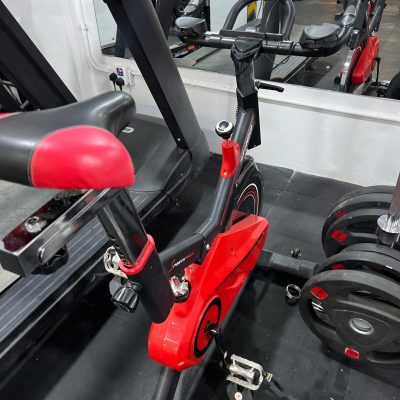
Access to institutional staff gym and wellness Nairobi is increasingly being treated as an operational support mechanism rather than a luxury benefit. In the Embakasi catchment specifically, gym access for teachers Embakasi is becoming part of retention and staff-support discussions.
Triad incorporates wellness facilities into its institutional service packages, enabling schools and clinics to support recovery and physical wellbeing without negotiating separate providers.
For administrators, this strengthens workforce reliability — a factor closely linked to safeguarding effectiveness.
Visiting staff and trainers create a hidden operational gap
Training institutions and specialized schools now depend heavily on visiting lecturers, exam moderators, clinicians and programme facilitators.
However, accommodation for short-term staff is often arranged separately and late, creating unnecessary logistical and safeguarding exposure.
Search demand for short stay accommodation for trainers in Embakasi and structured training facilitators accommodation Embakasi reflects this growing operational dependency. For visiting healthcare professionals and academic partners, administrators also increasingly require short term accommodation near JKIA for staff to reduce travel risk and deployment delays.
Triad integrates accommodation within the same service structure that manages water, laundry and wellness. This allows visiting staff to be deployed into a controlled environment that already aligns with institutional hygiene and operational standards.
For institutions running tight academic or clinical schedules, this significantly reduces uncertainty.
Why the Embakasi corridor requires a different service strategy
Institutions serving schools and clinics around Embakasi Industrial Area operate in a uniquely dense and high-pressure environment. Staff commute long distances, students and patients arrive in high daily volumes, and operational hours often extend beyond standard school or clinic schedules.
This has created growing demand for tightly coordinated, locally responsive services rather than city-wide vendor contracts.
That is precisely where Triad is positioned.
Its model is built around one operational relationship covering water supply, professional laundry, wellness access and short-stay accommodation. For institutions, this reduces administrative overhead while strengthening continuity across hygiene, staffing and logistics.
From service purchasing to institutional risk protection
What is changing in Nairobi’s education and healthcare sector is not only the type of services being purchased, but the logic behind those decisions.
- Water reliability supports sanitation.
- Laundry turnaround protects hygiene and reputation.
- Wellness access stabilizes staff performance.
- Accommodation reliability secures training delivery and clinical programmes.
When these functions are coordinated under one operational structure, institutions reduce the number of things that can go wrong during a normal week.
In an environment where compliance expectations, safeguarding scrutiny and public accountability continue to rise, bundled operational support is becoming one of the most practical — and overlooked — forms of institutional risk management available to schools, clinics and training centres in Embakasi and across Nairobi.